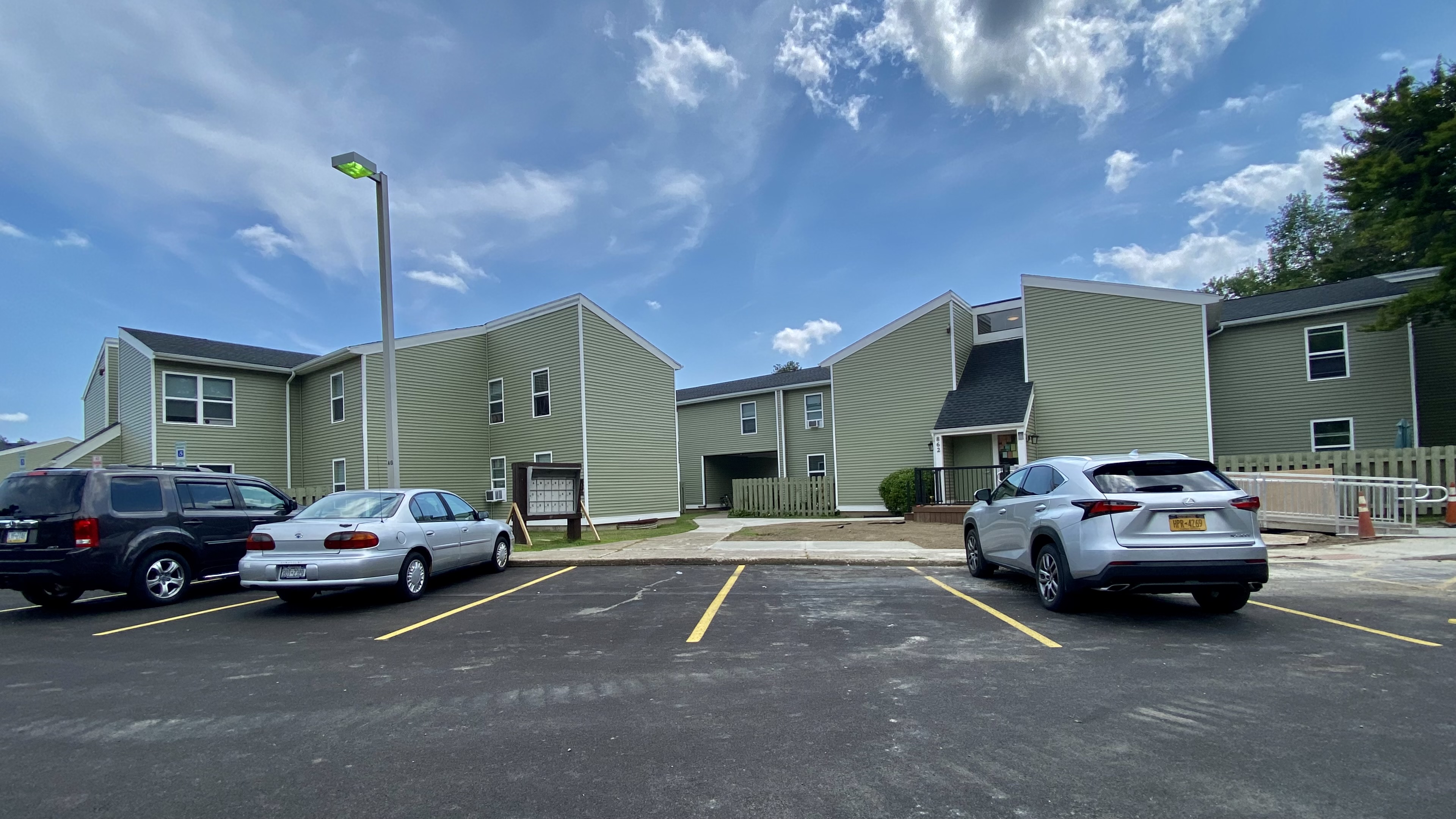
Federal housing law offers new protections for affordable apartments in Seffner
Melissa Bonner uses a wheelchair and needed a new place to live after her brother became ill. She found one at North Grove Manor, a 31-unit affordable apartment complex in Seffner.
A federal housing law enacted in July could help preserve rental assistance for residents of USDA-financed properties like North Grove Manor, although the protections are not automatic.
"I lived with my brother for a little while, and he started getting sick, so I'm like, I need to start finding a place to go," Bonner told Spectrum Bay News 9.
The 21st Century ROAD to Housing Act, enacted as Public Law 119-101, changes how the U.S. Department of Agriculture provides rental assistance to low-income residents of federally financed rural housing. The legislation became law without the president's signature.
New law aims to prevent loss of rental assistance
Previously, USDA Section 521 rental assistance was tied to an active mortgage under the agency's Section 515 or Section 514 rural housing programs. When a qualifying mortgage matured or was paid off, the rental assistance generally ended.
The new law allows eligible property owners to continue receiving assistance through a standalone rental assistance contract, even after the USDA mortgage expires.
Under the program, owners may enter into 20-year contracts if their properties meet eligibility requirements and agree to preserve affordable housing.
The protections apply to qualifying properties with existing rental assistance whose USDA loans are approaching maturity. Continued federal funding is also required.
Residents in assisted units generally pay 30% of their adjusted household income toward rent and utilities, with USDA assistance covering the eligible difference.
The changes are intended to address a growing problem in rural communities, where affordable apartments have been leaving the federal housing program as mortgages expire.
The Housing Assistance Council reported that 621 Section 515 properties containing 14,928 apartments left the program between June 2021 and March 2026.
Enterprise Community Partners, a national affordable housing nonprofit, warned that more than 380,000 USDA-financed rental units faced the eventual loss of assistance by 2050 under the previous system.
North Grove Manor shows importance of affordable housing
North Grove Manor, built in 1979, was preserved through approximately $4.1 million in federal financing, including $2.5 million in federal housing tax credits and a $1.6 million USDA Rural Development loan, according to Spectrum Bay News 9's October report.
Residents pay an average of approximately $250 per month toward rent, with federal rental assistance helping cover housing costs.
The property's existing affordability commitment reportedly extends through 2067. That commitment is separate from the new federal rental assistance provisions.
For Bonner, the assistance has made independent living more manageable.
"Here I can pay my rent and have sort of life with it," she told Spectrum Bay News 9.
Colleen Fisher, executive director of the Council for Affordable and Rural Housing, said housing advocates have spent years pushing for protections for USDA-financed properties.
"In Washington, Capitol Hill, there was a recognition that rural had been sort of left by the roadside," Fisher told Spectrum Bay News 9.
Fisher said many residents of these properties are seniors or people with disabilities.
Kevin Flynn, president of Flynn Management Corporation, which manages North Grove Manor, said preserving existing affordable housing has become increasingly challenging.
"It's really become difficult to preserve that housing, and whatever dollars we can get from the state or federal government really impact those communities," Flynn said in Spectrum Bay News 9's October coverage.
Federal implementation and funding still needed
Although the legislation is now law, its rental assistance provisions require additional federal action before they can be fully implemented.
The USDA's Rural Housing Service must develop regulations governing how eligible properties can enter standalone rental assistance contracts.
According to the Housing Assistance Council's implementation tracker, the law requires USDA to publish a proposed rule by approximately Jan. 7, 2027, and an interim final rule by July 11, 2027.
Congress must also continue appropriating funds for Section 521 rental assistance.
HousingWire reported that federal rulemaking and funding delays could extend implementation of some provisions of the broader housing law into 2028. USDA's rental assistance changes have their own statutory deadlines, however, and should not be assumed to follow that timeline.
Participation in the standalone assistance program is voluntary. Eligible property owners may choose not to enter new contracts.
The legislation also does not automatically provide funding for accessibility improvements at existing properties. Owners must seek separate financing for those projects.
Jonathan Harwitz, director of public policy at the Housing Assistance Council, said losing affordable housing can have an outsized impact on small communities.
"If you lose a project in one of these places, it really distorts the market and puts the [residents] at risk of not being able to live in the community," Harwitz said during a housing policy discussion covered by HousingWire.
For residents of North Grove Manor and similar developments, the new law offers another potential way to preserve affordable housing as federal mortgages reach the end of their terms.