USF study finds deep-sea marine life in Gulf has declined up to 85% since 2010 oil spill
Populations of fish, squid, krill and other marine animals living deep in the Gulf have declined sharply in the years following the 2010 Deepwater Horizon oil spill, with little evidence of recovery, according to a new study involving a University of South Florida St. Petersburg marine biologist.
The findings, published Oct. 19 in the Proceedings of the National Academy of Sciences, document population declines of approximately 60% to 85% among certain groups of deep-sea animals between 2011 and 2015. Subsequent monitoring through 2023 suggests the affected communities have not returned to their earlier abundance.
Researchers collected more than 2,000 net samples from waters 200 to 1,500 meters below the surface during a long-term investigation of the Gulf's deep-pelagic ecosystem. The research team described the effort as one of the most comprehensive studies of deep-sea marine life ever conducted.
The findings raise concerns about the Gulf's food web, including the availability of prey for tuna, sharks, dolphins, whales and seabirds. Although the study did not specifically examine Tampa Bay or waters immediately offshore from Apollo Beach and Ruskin, the health of the broader Gulf ecosystem is relevant to the region's marine environment.
Deep-sea fish, crustaceans and squid show steep declines
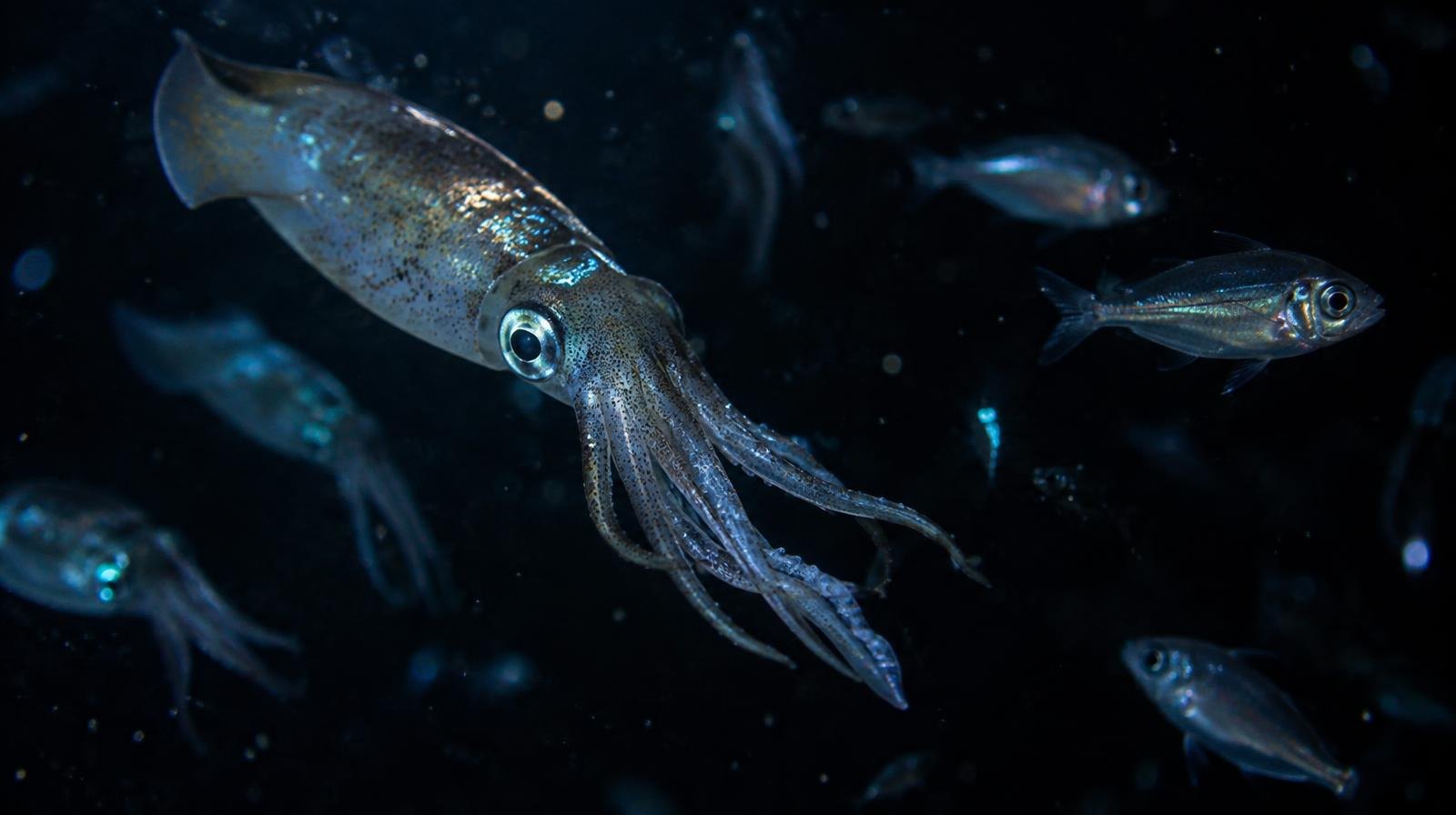
The study documented declines of approximately 64% in deep-water fish, 62% in large crustaceans and 60% in smaller cephalopods, including squid.
Some groups experienced even steeper losses. Krill populations declined by nearly 73%, lanternfish by 63% and bristlemouth fish by 69%, according to WUSF's report on the research.
A USF St. Petersburg announcement described declines ranging from 60% to 85% among the animals studied.
Researchers said the magnitude of the changes exceeded declines documented in comparable deep-water datasets spanning approximately 60 years.
Heather Judkins, a marine biologist at USF St. Petersburg, oversaw the collection and analysis of octopods, squid and pelagic snails during research cruises conducted by the DEEPEND Consortium, short for Deep-Pelagic Nekton Dynamics of the Gulf of Mexico.
Judkins has participated in the consortium since its establishment in 2010.
"These important scientific findings have been a long time coming," Judkins said in the university's announcement. "The team behind them has done extensive work to uncover what is happening in the Gulf and it shows how vital long-term monitoring is for understanding population dynamics, especially in remote areas like the deep sea."
Researchers examine possible connection to Deepwater Horizon
The study identifies the Deepwater Horizon disaster as a likely major contributor to the declines, although researchers have not established that the spill alone caused every population change.
The 2010 disaster released an estimated 4 million to 4.9 million barrels of oil into the Gulf over 87 days. Approximately 770,000 gallons of chemical dispersant were injected near the damaged wellhead, according to the PNAS study.
Researchers examined environmental conditions, including water temperature, oxygen availability and food supply, while investigating possible explanations for the changes in marine populations.
The team also detected oil-related compounds in deep-water fish eggs and cephalopod tissues in samples collected between 2011 and 2023, according to WUSF.
Those findings raise concerns about persistent contamination and its potential effects on marine organisms. However, detecting oil-related compounds does not, by itself, establish that they caused the observed population declines.
Tracey Sutton, a biological oceanographer at Nova Southeastern University and the study's lead author, said the results challenge assumptions about the resilience of deep-sea ecosystems.
"The Gulf is amazingly diverse, but deep-pelagic communities themselves are fragile because the system appears to be finely tuned," Sutton said in the USF announcement.
The researchers found that the affected populations remained substantially below earlier levels during subsequent monitoring, suggesting that recovery could take much longer than initially anticipated.
Declines could affect Gulf predators and food webs
Deep-sea animals such as lanternfish, krill and squid are important prey for larger marine species, including commercially valuable fish, marine mammals and seabirds.
The organisms also play an important role in transferring energy and carbon through the ocean as they move between deep and shallower waters.
Scientists are concerned that prolonged reductions in their abundance could affect the feeding behavior and distribution of predators.
"Think about our tuna and our other big commercial fishes, the marine mammals, of course, birds ... So, there could be changes in their feeding and behavior patterns due to the less abundance of their prey," Judkins told WUSF.
Researchers also used acoustic surveys to examine the distribution and abundance of marine animals.
Kevin Boswell, a marine scientist at Florida International University, said the acoustic data showed substantial reductions consistent with the net-sampling results, according to USF's report on the research.
The findings do not establish that commercial fish populations throughout the Gulf have declined by the same percentages. Instead, they indicate that important prey communities in the deep Gulf have experienced sustained losses.
Scientists plan further monitoring in 2027
The DEEPEND Consortium brings together researchers from multiple institutions to investigate the long-term effects of the Deepwater Horizon disaster on marine ecosystems.
The team has conducted 12 research expeditions, collecting biological samples, environmental data and information about marine food webs, according to the USF announcement.
Researchers plan another Gulf research cruise in June 2027 and are seeking funding to continue monitoring deep-sea populations over the coming decade, according to WUSF.
The continuing research could help scientists determine whether the affected populations are beginning to recover and how persistent changes in the deep ocean influence other marine species.
For now, the study indicates that major changes to the Gulf's deep-sea ecosystem have persisted for more than a decade, with no established timeline for recovery.