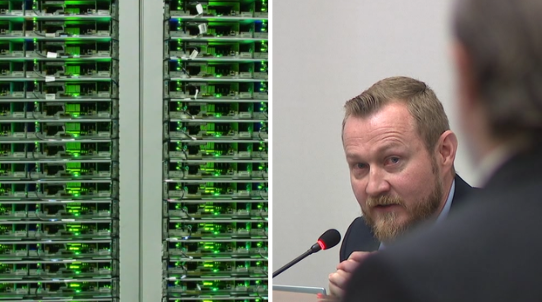
Hillsborough County commissioners voted 7-0 on Wednesday, Aug. 5, to order a moratorium ordinance drafted against AI data center development in unincorporated areas, a move that would block large-scale facilities from landing along the U.S. 41 and I-75 corridors through Apollo Beach and Ruskin.
The board passed two separate motions directing staff to study water impacts and ordering the county attorney to write the moratorium language.
No data center applications are currently pending in the county.
The moratorium cannot take effect until Oct. 1, 2027, when a state preemption law, Senate Bill 180, expires. But commissioners said the drought gripping Hillsborough County made early preparation urgent.
"This is bigger than just data centers," Commissioner Chris Boles said at the Aug. 5 meeting, according to Tampa Bay 28. "Today it's AI. Tomorrow, who knows what's going to be? We have to consider the idea that we have to look at all water-intensive industries."
Two motions, one goal
Boles brought the first motion, which directs county staff to research water conservation tools available under Senate Bills 180 and 484 and recommend changes to the land development code and utility requirements.
Commissioner Donna Cameron Cepeda brought the second, directing staff to evaluate land-use regulations specific to data centers, including a potential ban on using county drinking water for cooling. That motion also orders the county attorney to draft the moratorium ordinance.
Cameron Cepeda originally proposed a five-year moratorium but scaled back after the county attorney's office warned that SB 180 prohibits local construction moratoriums through Oct. 1, 2027, and gives developers the right to sue.
Commissioner Joshua Wostal noted a possible legal opening: because data centers are not a recognized use under the county's current land development code, new restrictions might not fall under SB 180's preemption.
Water worries hit close to home
The Tampa Bay Seawater Desalination Plant sits in Apollo Beach at Tampa Electric's Big Bend Power Station. It supplies up to 25 million gallons per day, roughly 10% of the region's drinking water for more than 2.5 million people.
Commissioner Wostal described the current drought as "one of the worst that we've had in a while." The county is under active water restrictions.
A Food and Water Watch representative identified as Isabella told commissioners that by 2028, AI data centers nationwide will require as much water as 18.5 million households for cooling servers alone.
Resident Susan Craunis invoked the January 2010 Plant City freeze, when heavy groundwater pumping dried more than 750 residential wells and opened roughly 140 sinkholes. About a dozen residents packed the commission chambers urging action on water consumption, noise, electricity costs and environmental damage.
No applications pending — yet
Adam Gormley of the Hillsborough County Development Services Department confirmed no data center applications are pending, though some parties have expressed preliminary interest. Under the current code, a data center could only win approval through a planned development zoning process requiring case-by-case review.
Several speakers pointed to University Energy Park near State Road 60 and Dover Road, which has been advertised as a potential hyperscale data center site, according to Florida Politics. County staff confirmed no application is pending for that location.
Hillsborough's action follows Lakeland, where city commissioners voted 4-3 on Monday, Aug. 3, to approve a one-year data center moratorium.
What comes next
County staff will complete a water impact study and the county attorney's office will return a drafted moratorium ordinance to commissioners for review. No return date was announced. The moratorium would take effect after Oct. 1, 2027, or sooner if SB 180 is struck down by a court.
Tampa Bay Water broke ground in March on a $181 million expansion of its Regional Surface Water Treatment Plant in Clearwater, adding 12.5 million gallons per day of capacity by 2028. The agency projects the Tampa Bay area will need up to 38 million additional gallons per day by 2043.



.jpg)