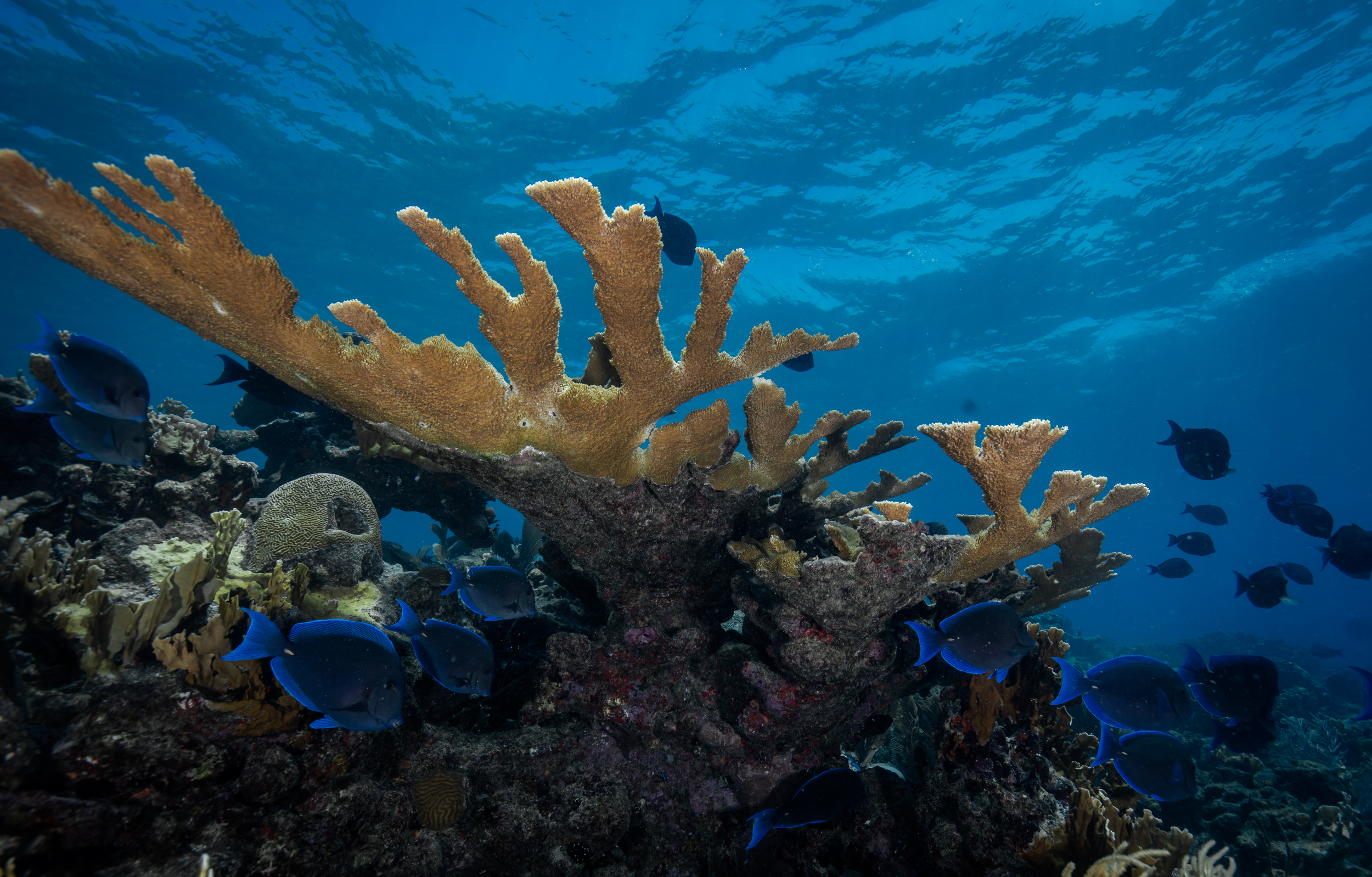
Endangered elkhorn coral developed over two decades is now sitting in 80-degree water at a Ruskin facility after Reef Renewal USA flew the specimens out of the Florida Keys, where temperatures had climbed past 88 degrees and threatened to kill the stock.
The rescue, reported by Spectrum Bay News 9 on Aug. 14, came after record-breaking July heat triggered alarm among scientists at the Hillsborough County nonprofit, which operates one of the largest land-based coral farms in the world from its Ruskin facility.
"The water here is 80 degrees — and at 87 they start stressing," President Michael Echevarria told Spectrum News. "The water is already over 88, 89 degrees in the Keys."
The coral, a crop of Acropora palmata, represents Reef Renewal USA's core genetic breeding inventory. Craig Watson, co-chair of the organization's Science Advisory Committee and former director of the University of Florida's Tropical Aquaculture Laboratory in Ruskin for 26 years, said the move protects stock the team has built over two decades.
2023 Heatwave Losses Pushed Nonprofit to Act Early This Year
The urgency traces back to 2023. During that summer's marine heatwave, ocean temperatures in northern Key Largo hit an unprecedented 101.1 degrees, according to a July 23 WLRN report. Reef Renewal USA lost nearly all of its corals in the wild. Echevarria said the organization learned from that disaster and acted before this year's heat peaked.
This Year's Heat Is Outpacing 2023's Record Levels
The 2026 heatwave is tracking worse than 2023, according to that same WLRN report. NOAA raised its coral bleaching alert for parts of the Florida Reef Tract earlier this summer, and South Florida endured 38 straight days of triple-digit heat indices by late July. Over the past 40 years, Florida's reef system has lost more than 90% of its healthy coral cover.
Some coral were also relocated to deeper, cooler water within the Keys.
Ruskin Farm Now Breeding Coral for Heat Tolerance
Beyond the immediate rescue, the nonprofit is working on a longer-term solution at its Ruskin farm: breeding heat-resistant coral through selective spawning. Echevarria said the goal is to identify thermally tolerant traits in surviving specimens and pass those genes to offspring. He acknowledged the process could take years.
Reef Renewal USA was founded in 2019 by Echevarria to focus on the Florida Keys reef tract. Technical Director Ken Nedimyer, a coral restoration pioneer who started this work in the Keys in 2006 and previously founded the Coral Restoration Foundation, oversees the organization's nursery and outplanting operations across multiple Keys sites as part of NOAA's Mission: Iconic Reefs initiative.
The organization expects above-average water temperatures in the Keys for the rest of 2026 and said it has an action plan to keep its rescued coral safe at the Ruskin facility through the summer and fall.





.jpg)