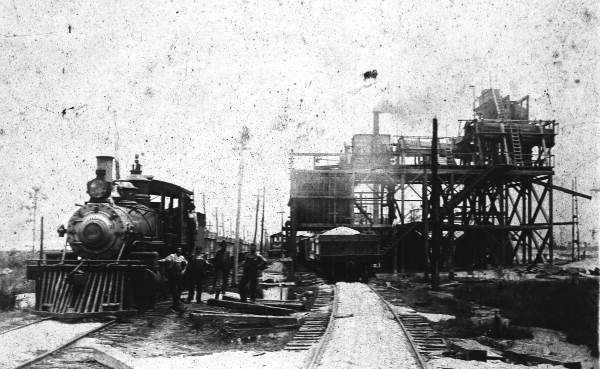
A new Florida law makes it harder for people living on former phosphate mining land to sue over radiation, raising the bar for homeowners across Bone Valley, a mining region that reaches into eastern Hillsborough County.
House Bill 167, signed by Gov. Ron DeSantis in late May and effective July 1, gives owners of reclaimed mine land a way to shed strict liability in pollution lawsuits. Under strict liability, a landowner can be held responsible for contamination without any proof of fault. Owners who record a public notice with the county and get a state radiation survey are now protected by a negligence standard instead. That means anyone suing them must show the owner was careless or helped cause the harm.
Mosaic Co., one of the world's largest phosphate producers, operates its Riverview fertilizer plant along U.S. 41, north of Apollo Beach and Ruskin. The facility produces roughly 6,000 tons of fertilizer daily and stores phosphogypsum, a mildly radioactive byproduct, in a towering waste stack east of the highway. The law covers former mine sites, not processing plants like Riverview. However, Mosaic is also seeking permits to expand that storage footprint by 140 acres, a project that would keep the Riverview site open for another two decades. No federal permits had been issued as of November 2025, WUSF reported.
Bone Valley stretches through Hillsborough, Polk, Manatee and Hardee counties. A 2003 U.S. Environmental Protection Agency report estimated about 40,000 homes had been built on reclaimed mine land in the region, with median gamma radiation exposure roughly two to three times higher than background levels, according to Inside Climate News.
How the new two-track system works
The law creates a two-track system. Landowners who want liability protection can request a gamma radiation survey from the Florida Department of Health at no cost and record a notice with the county identifying the property as a former phosphate mine. Residents who want to file a contamination lawsuit, however, must hire a certified health physicist or radiation protection technologist at their own expense.
"It requires the homeowner to expend thousands of dollars before even making it to the courthouse. It is a toll bridge on the way to the courthouse," attorney Ryan Ellis of the Lanier Law Firm told Inside Climate News.
The department estimated it would need $3 million a year to carry out the free landowner surveys, according to a Florida Senate fiscal impact statement.
Mosaic backed the bill as critics cried foul
Mosaic, which paid lobbyists to push for the bill, according to legislative records reported by WUSF, said in a statement that HB 167 brings clarity to owners of former mine sites and removes the prospect of strict liability for what the company described as natural geological conditions.
Critics see it differently. Ragan Whitlock, a staff attorney for the Center for Biological Diversity, told Florida Phoenix columnist Craig Pittman, as the bill headed to a House vote, that it was "still very much a handout to the phosphate companies to reduce their liability."
The bill passed the Florida House 87-24 in January, with all 24 "no" votes from Democrats. The Senate cleared it 32-4 in March, as reported by Florida Politics. Rep. Lawrence McClure, R-Dover, and Rep. Richard Gentry, R-Astor, sponsored the measure. A similar bill died during the 2025 legislative session.
A 2020 lawsuit alleged uranium under mobile home parks
A 2020 class-action lawsuit against Mosaic and real estate developers alleged that ground beneath two Mulberry mobile home parks, Paradise Lakes and Angler's Green, was contaminated with uranium and radium from phosphate mining. The lawsuit stated radiation levels at those communities translated to residents receiving more than one chest X-ray a week.
Property owners who believe their land sits on a former phosphate mine can request a radiation survey through the Florida Department of Health.




.jpg)