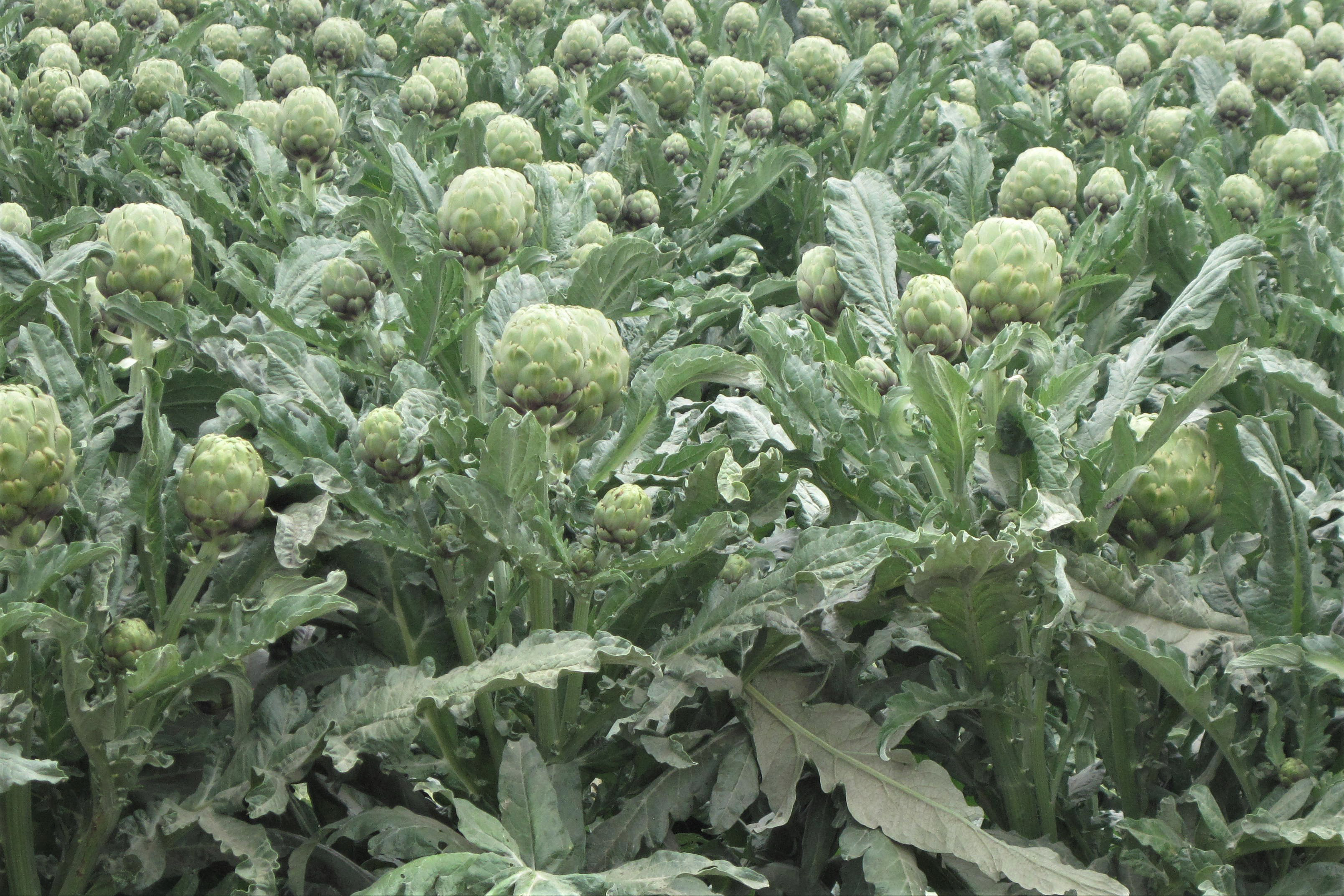
A research team at the UF/IFAS Gulf Coast Research and Education Center in Wimauma has developed a system that lets Florida growers produce artichokes at commercial scale, yielding up to 15,420 pounds per acre. That's more than 90% of what California's coastal farms average, and it could open a new revenue stream for South Shore agriculture.
Associate professor Shinsuke Agehara, who has spent nearly a decade on the problem at the Wimauma campus, built the system around gibberellic acid, a naturally occurring plant hormone that triggers bud development without the winter chill artichokes normally need.
"The major challenge is that Florida's warm winters often don't provide enough chilling," Agehara told Bay Soundings.
The hormone treatment alone isn't enough. Agehara's system pairs it with specific cultivar selection, planting dates, fertilization and irrigation management tuned to Florida conditions. Recommended varieties include Imperial Star for high productivity and the hybrids Green Queen or Green Globe Improved for better fruit quality, though hybrid seed costs more.
Planting season opens in late August
The timeline matters for local growers: seeds go into small pots or seedling trays in late August or mid-September, kept in partial shade and protected from rain. Transplant to full sun about six weeks later. Apply gibberellic acid roughly six weeks after transplanting.
Nearly all artichokes sold in the United States ship from a narrow strip of coastal California. Individual buds retail for more than $3 each. Growing them locally eliminates cross-country shipping and delivers a fresher product to Florida markets.
Why it matters for South Shore farms
Hillsborough County ranked third in Florida for total agricultural sales in the 2022 USDA Census of Agriculture, moving $703.9 million in products. Vegetables, melons, potatoes and sweet potatoes accounted for $84.2 million of that total. Ruskin's farming community, historically built on tomatoes, faces pressure from citrus greening and weather volatility that has growers looking for alternative crops.
Agehara hosted an Artichoke Field Day on March 4 at the GCREC that drew 36 participants, including commercial growers and home gardeners. A post-event survey found 70% of attendees expressed interest in growing artichokes and 24% said they wanted to expand production.
What's next
Agehara is planning a second Artichoke Field Day at the Wimauma facility in February 2027, including taste tests on the newest crop. No exact date has been set. Updates will be posted to the UF Horticulture Lab Facebook page.
A production guide co-authored by Agehara is available through UF's EDIS system for growers ready to start planning. Agehara can be reached at 813-419-6583 or [email protected].


.jpg)